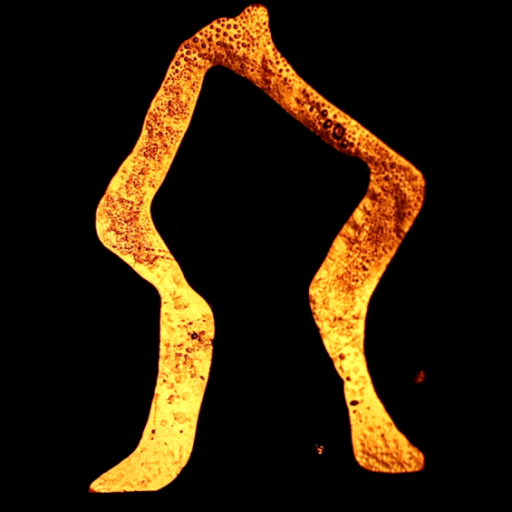
A nice laminar flow of the right shape/volume/airspeed is the best way to get the flame up and dancing. The slit nozzle is easy to build and produces really nice flames.
Basic slit nozzle construction:
We’re injecting small shaped jet of air into the flame. To do this we fashion nozzles out of copper tube. We use 3/16″ copper pipe which mates directly with aquarium air tubing. The minimum length of the pipe leading to the nozzle is 4.5″ in keeping with the 4″ keep out zone for flammable objects at the base of the flame.
Cut a 4.5″ section of pipe with a small tubing cutter
with smooth parallel pliers (knypex) crimp the end 1/2 way, enough to insert a tapered feeler gauge. Sanding the end flat and polishing at this point will make the finished nozzle easier to clean and maintain. Insert the feeler gauge and give a final solid crimp. Try not to over crimp as copper will get too thin making the nozzle fragile.
To take full advantage of the small air pumps abilities to produce an air jet we’ll try to operate at the maximum power range of the pump. You can find this for your pump by running the pump into a single air line with a valve while monitoring pump power. Close the valve slowly you will see the power rise, peak, and fall off. The peak power is where a nozzle/pump combination will make the fastest air at the most volume. For our setup a 0.6mm feeler gauge is about right. Crimping while monitoring pump power is another method to make a good nozzle without a feeler guage.
Now insert the pipe end of the nozzle into the aquarium air line about 5mm. Cut about 3cm of the silicone tape, and fold in half longways. Stretch it together to seal it as one piece, then wrap it while stretching it around the end of a manipulator, just in front of the air line. Now you’re ready to check it with a flame.